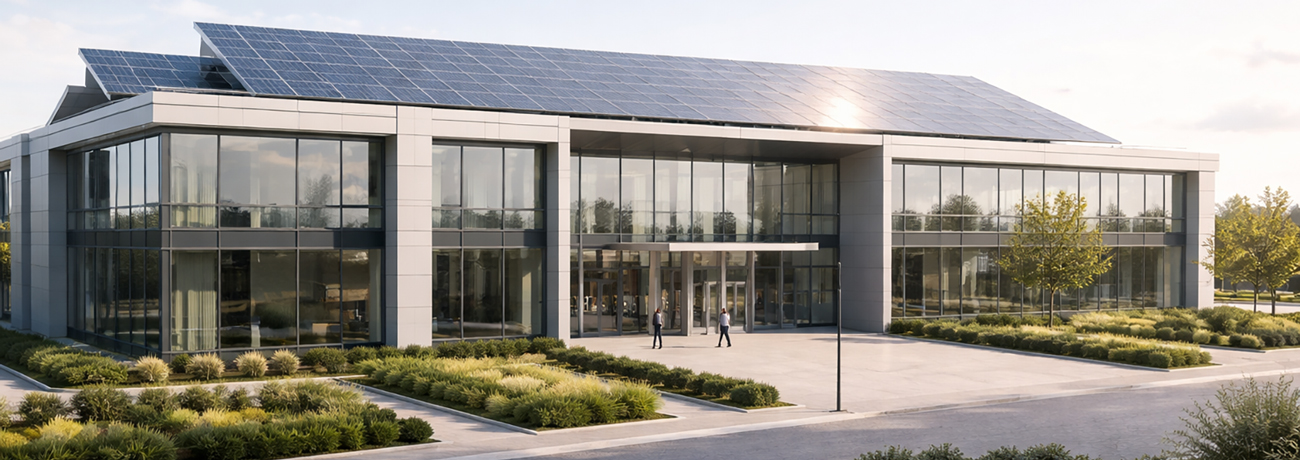
When people think about solar installation, they often picture the visible part, scaffolding, roof work, panels going up, electricians moving around the plant room. That is only one part of the schedule. A good share of the timeline sits before any installation team arrives.
Surveys, design work, structural checks, grid applications and planning around the day-to-day use of the building all take time. On some sites, those stages are straightforward. On others, they are where most of the work happens. That can be a little frustrating if you are keen to get going, though it usually saves trouble later.
So the headline answer is this: the installation itself may be relatively quick, but the whole project rarely is.
The first stage is usually a review of the building and its electricity use. Recent bills, half-hourly data where available, site photographs, roof details and basic information about how the building operates all help shape the early view.
This is where the obvious questions are addressed. Does the site use enough daytime electricity for solar to be worthwhile? Is the roof likely to be suitable? Are there any immediate signs that the project may be awkward, such as limited space, an ageing roof or a very unusual load profile?
At this point, the goal is not to finalise a system. It is to see whether the project is worth taking further.
This can often happen quite quickly once key site information is available.
The physical survey depends on access, roof safety and how busy the building is.
Structural questions or technical clarifications can add extra time.
For some buildings, the survey stage moves along smoothly. For others, especially larger industrial or multi-use sites, it can take longer because there is simply more to check.
Once the site has been reviewed properly, the system can be designed in more detail. That includes the proposed panel layout, inverter selection, connection approach and a clearer idea of the likely output. At the same time, the practical side of the job is considered. How will the installation team access the roof? Where will equipment go? How will the work fit around normal site operations?
This stage tends to produce a firmer proposal rather than a broad early estimate. It is also the point where certain complications begin to show themselves more clearly. Roof limitations, access problems, drainage concerns on flat roofs, or the presence of rooftop plant can all influence the layout.
The better this part is handled, the less likely the project is to drift later on.
For many commercial solar projects, grid connection and DNO approval are the least predictable part of the timeline. Once an application is submitted, the local Distribution Network Operator assesses whether the network can accept the proposed installation and how much electricity can be exported, if any.
Sometimes this is relatively straightforward. Other times it introduces a pause while capacity is checked, technical conditions are reviewed, or a revised proposal is needed. If the local network is tight, this stage can shape the project more than the roof itself, which is saying something.
In short, DNO approval can be quite quick, or it can stretch the programme noticeably. It depends heavily on the area and the system being proposed.
Yes, often more than expected. If the roof is clearly suitable and in good order, this part may be routine. If the building is older, if the structure is less straightforward, or if there are questions about load-bearing capacity, extra assessment may be needed.
That can add time, though it is far better to sort those questions out early than pretend they are not there. The same goes for roof condition. If the roof is nearing the point where significant repair or replacement is likely, it can change the sequence of the project entirely.
No one wants to install solar cleanly, only to discover later that major roofing work should have come first.
Once approvals, design work and planning are in place, the physical installation is often the most visible but not always the longest stage. For smaller commercial systems it may be relatively quick. For larger roofs, more complex access arrangements or busier industrial sites, it naturally takes longer.
Roof work, mounting systems, panels, inverters and electrical connections all need to be completed in the right order. On active sites, the work may be phased to avoid disruption. A warehouse with constant deliveries, for example, may need a different working pattern from an office building or farm.
That means the installation schedule is shaped as much by the building’s routine as by the equipment itself.
Before the system goes live, it needs to be tested, commissioned and checked properly. Electrical connections are reviewed, inverters are configured and monitoring systems are set up. If the project includes export limits or special control arrangements, those need confirming too.
This stage is sometimes overlooked because the panels are already on the roof and the project looks finished. Not quite. Switch-on only happens once the system is ready to operate properly and safely.
It is the difference between looking complete and actually being complete.
Grid connection is a common one. Structural questions can slow things down too. So can roof repairs, access complications, tenant or landlord approvals on leased buildings, and the need to coordinate installation around a business that cannot easily pause normal activity.
Weather can play a part during the roof phase, though it is rarely the whole story. More often, delays come from practical details that were not fully appreciated at the start. That is one reason thorough early surveying tends to pay for itself.
There is no point pretending every commercial solar project follows a neat, identical schedule. They do not.
Sometimes, yes, though it depends on what stage is being discussed. Providing good site information early helps. So does arranging access properly, being realistic about how the building operates, and dealing with roof or structural questions before they become awkward surprises.
What does not usually help is rushing the stages that exist to reduce risk. A project that skips over checks can look quicker early on and slower later when the same issues resurface with worse timing. A familiar pattern in building work, really.
The quickest route is often the one with the fewest avoidable surprises, not the one with the most optimism.
Assume that the timeline has several stages and that the roof installation is only one of them. The process usually begins with information gathering and survey work, moves through design and approvals, then reaches installation, testing and final connection.
Some projects move smoothly and quite quickly. Others take longer because the building, the network or the operational constraints are more involved. The sensible approach is to plan for a proper process rather than pinning everything on the moment the first panel arrives on site.
That tends to lead to fewer surprises and better decisions along the way.