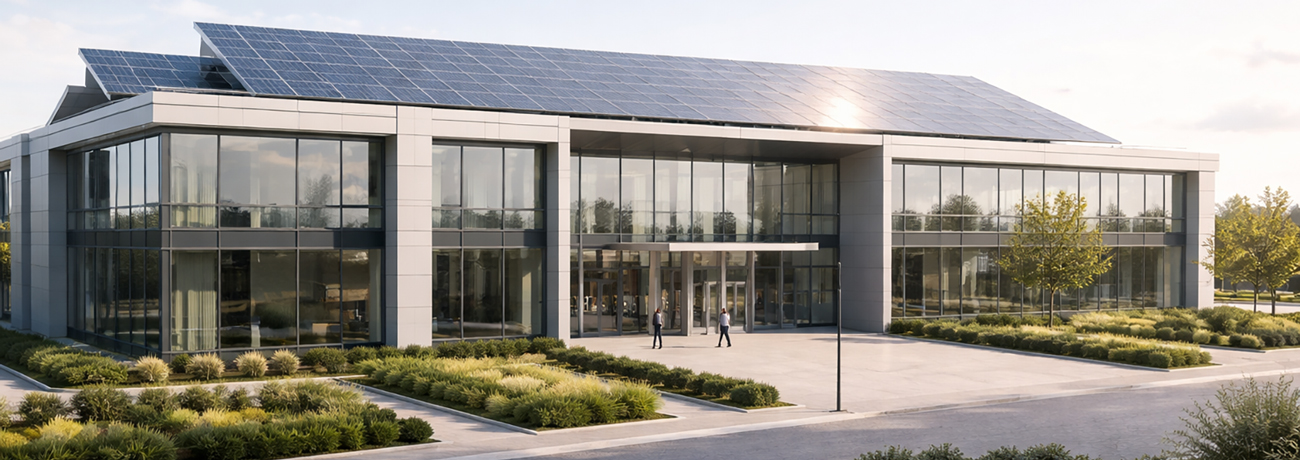
On paper, warehouses look like the perfect match. Large roof areas, relatively simple structures and plenty of open space. It is easy to see why solar is often suggested early on.
In many cases, that instinct is right. Warehouses can support sizeable systems, and the scale alone makes them worth looking at. But once you move past the headline, details start to matter. Roof condition, usage patterns, access and grid limits can all change how effective the system actually is.
So yes, warehouses can work well. Just not automatically.
The key question is when electricity is used. Warehouses with strong daytime activity, picking, packing, conveyor systems, offices, lighting, tend to align well with solar generation. Energy produced during the day can be used directly.
Others operate later into the evening or run night shifts. In those cases, solar still contributes, but more of the demand sits outside daylight hours. That changes how much of the generated power is used on-site.
Forklift charging is another factor. If charging happens overnight, solar will not directly support it unless the pattern is adjusted or storage is introduced.
Large uninterrupted areas are easier to work with than roofs full of plant and obstacles.
The roof must safely support the additional load of the system.
Installing onto a roof due for replacement soon can create unnecessary cost later.
Access for installation and maintenance also matters. A good layout makes the system easier to look after over time.
Roof space is not always as usable as it first appears. Rooflights, ventilation units, access walkways and safety zones can reduce the area available for panels. Even small obstructions, repeated across a large roof, add up.
Grid connection is another common constraint. In some areas, export limits restrict how much electricity can be sent back to the network. That can influence system size and design.
There is also the question of tenancy. On leased buildings, ownership of the roof and responsibility for alterations need to be clear before anything moves forward.
Warehouses are busy environments. Installation has to work around deliveries, loading bays, vehicle movements and internal operations. That usually means planning work in stages or outside peak periods.
Access routes, lifting equipment and safety arrangements all need to be coordinated. On larger sites, this becomes a project in its own right rather than a simple add-on.
Downtime can often be minimised, but it rarely disappears completely. That is part of the planning conversation.
It can, particularly where daytime usage is strong. Lighting, automation systems and office areas often run during the hours when solar output is highest. That allows a meaningful portion of electricity to be generated on-site.
Where usage sits outside those hours, the impact can be more gradual. In those cases, combining solar with other measures, such as adjusting charging schedules or adding storage, may improve the outcome.
The savings depend on how closely generation lines up with demand.
In some cases, yes. Batteries can store excess solar generation during the day and release it later when demand continues. This can be useful where activity extends into the evening or where charging happens after solar output has dropped.
They can also help reduce short demand spikes, which are common on busy sites. However, they add cost and are not always necessary. Their value depends on how the warehouse operates.
It is a question of timing rather than simply adding more equipment.
Maintenance is generally straightforward, but access is key. Systems spread across large roofs need safe and practical routes for inspection and cleaning. Dust, debris and general wear can affect performance over time if left unchecked.
Well-planned layouts make this easier. Poor access tends to lead to maintenance being delayed, which eventually shows up in performance.
It is not a major burden, but it does need considering early on.
If the roof is unsuitable, heavily shaded or nearing replacement, solar may not be practical in the short term. If most energy use occurs overnight with little flexibility, the financial case can be weaker.
Grid constraints can also limit what is achievable. In some situations, addressing these issues first, or considering other energy measures, may be the better route.
Warehouses are often strong candidates, but not every building ticks the right boxes.
Start with how the site uses electricity across the day. Look at timing, peak periods and steady demand. Then consider the building itself, roof condition, available space and any obvious constraints.
This usually gives a clearer picture of what is possible and what is worth pursuing. From there, system design and cost can be explored in more detail.
The roof may be large, but the answer usually sits in how the building runs.