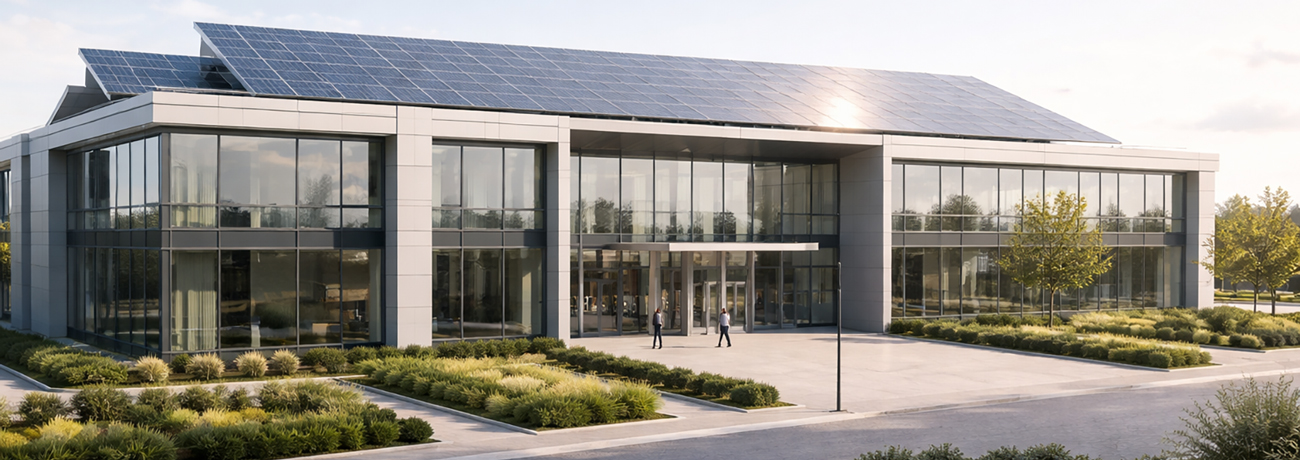
It is easy to focus on what is happening inside a building. Lighting, machinery, heating, cooling. The roof tends to sit quietly above it all, out of sight and often out of mind.
Yet it has a direct influence on how much energy a building uses. Heat gain, heat loss, insulation performance and even the placement of equipment all come back to what is happening at roof level.
In many commercial buildings, the roof is one of the largest surfaces exposed to the elements. That alone makes it important.
In warmer conditions, roofs absorb solar radiation and transfer heat into the building. This increases the load on cooling systems, particularly in buildings with large open spaces such as warehouses or offices.
In colder conditions, poorly insulated roofs allow heat to escape. Heating systems then work harder to maintain internal temperatures. This can be a steady drain rather than a sudden spike, but over time it adds up.
The roof sits between external conditions and internal comfort. That boundary matters more than it might appear.
Better insulation reduces both heat gain and heat loss.
Lighter surfaces reflect more heat, darker ones absorb it.
Proper airflow helps manage temperature build-up.
These factors work together. Changing one can affect how the others behave.
Many commercial buildings have equipment installed on the roof. HVAC units, ventilation systems, ducting and other plant all sit above the main structure. These systems influence energy use directly through their operation and indirectly through how they interact with the building.
Poor placement or ageing equipment can reduce efficiency. Heat generated by rooftop plant can also affect surrounding areas, increasing cooling demand.
In some cases, simply reviewing how equipment is arranged can improve overall performance.
Solar panels turn the roof into an active part of the building’s energy system. Instead of absorbing heat without purpose, the surface is used to generate electricity.
This can offset part of the building’s demand, particularly during daylight hours. It can also reduce heat gain slightly by shading the roof surface beneath the panels.
The effectiveness depends on available space, orientation and how the building uses electricity. Even modest systems can contribute where conditions are suitable.
A roof nearing the end of its lifespan introduces complications. Installing solar or making major changes may not make sense if the surface needs replacing in the near future.
Repairs, upgrades or full replacement can be part of a broader energy strategy. Improving insulation or surface performance at the same time can make future energy measures more effective.
Timing matters. Doing things in the right order avoids unnecessary cost.
In many cases, yes. Improved insulation, better materials and more effective ventilation can reduce the load on heating and cooling systems. These savings are often steady rather than dramatic, but they build over time.
The scale of improvement depends on the starting point. Older buildings with limited insulation tend to see more noticeable changes than newer, well-designed structures.
It is not always the first measure considered, but it can be one of the more consistent ones.
Flat roofs are common on commercial buildings and are often easier to use for solar installations. They allow flexible positioning of panels and easier access for maintenance.
Pitched roofs can still be suitable, though orientation becomes more important. The angle and direction of the roof influence how much solar energy can be captured.
Each type has its own considerations, but both can play a role in energy management.
If the building already has strong insulation and efficient systems, further improvements may deliver smaller gains. In these cases, attention may shift to how energy is used inside the building rather than the structure itself.
Constraints such as planning restrictions or structural limits can also affect what can be done. Not every roof can support additional equipment or modifications.
Understanding these limits early helps set realistic expectations.
Start with a simple review. How does the building behave in different conditions? Where does heat build up, and where does it escape? How hard are heating and cooling systems working to maintain comfort?
From there, consider whether the roof is contributing to the problem or could become part of the solution. Insulation, materials and solar all have a role, but their value depends on the building as a whole.
The roof may be out of sight, but it is rarely out of the equation.